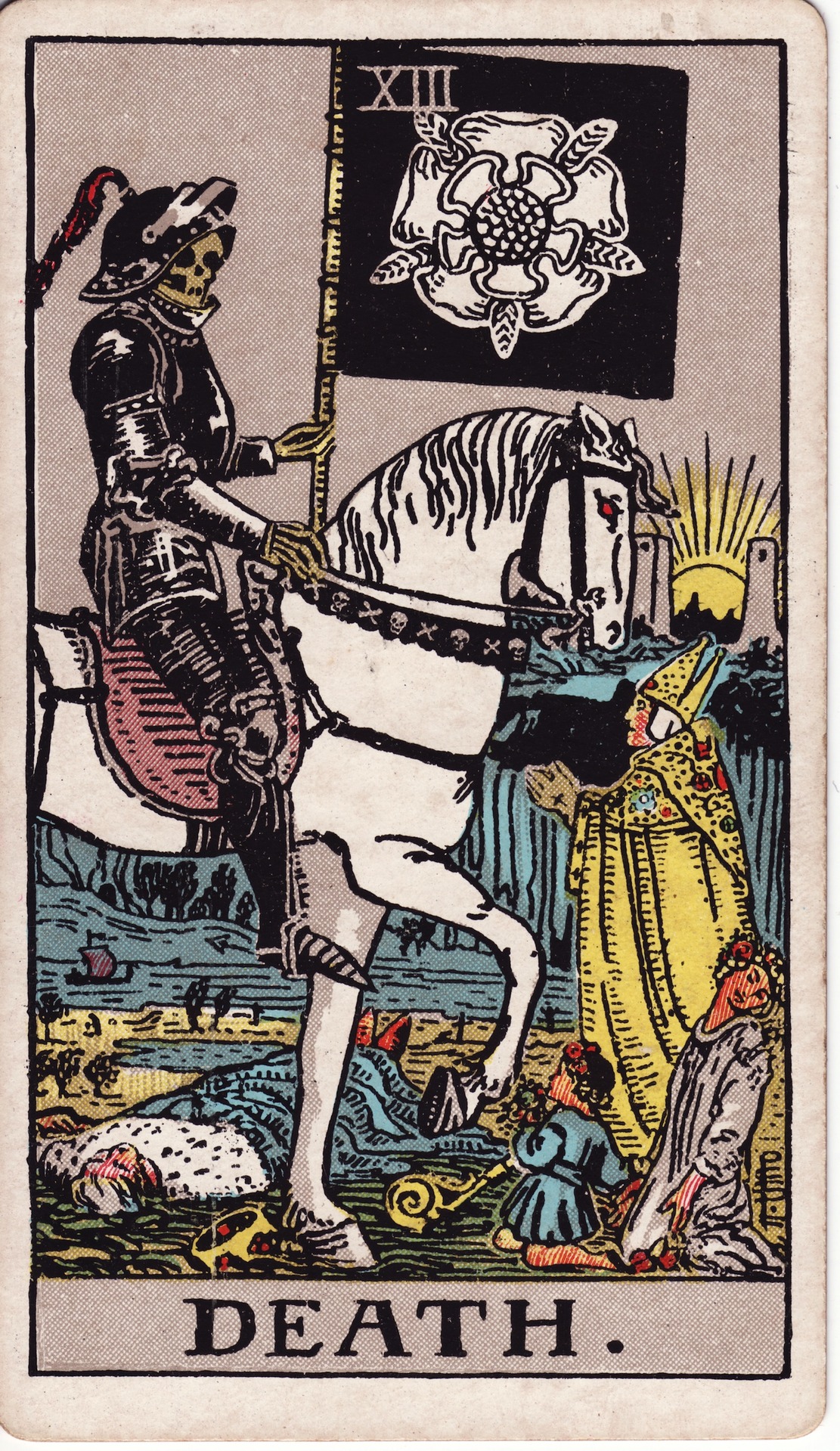
Death
Major Arcana
Death
Transformation and endings
Upright Meaning
In love and relationships, the Death card signifies a major transformation. This could mean the end of a relationship, but more often, it indicates the end of an old phase, pattern, or way of relating within an existing partnership. It might suggest releasing old habits, grudges, or expectations that are holding the relationship back, leading to a rebirth of connection or a deeper understanding. For singles, it could mean letting go of outdated ideas about love or a past relationship to open up to new, more fulfilling experiences. While potentially challenging, this card ultimately points to a necessary change for growth and renewed intimacy or the opportunity for a more authentic connection.
Reversed Meaning
Professionally, the Death card signals a significant change or ending. This might manifest as the conclusion of a project, the end of a job, a career transition, or the complete overhaul of your professional goals. It's a powerful indicator that something in your work life has run its course and needs to be released to make way for new opportunities. This could be a challenging period, but it's essential for growth. Embrace the chance to shed old responsibilities, redefine your career path, or initiate new ventures that are more aligned with your true calling. It's about closing one chapter to begin another, often leading to a more fulfilling career path.
Symbolism
The Death card in Tarot is perhaps one of the most misunderstood cards, often evoking fear due to its literal name. However, it rarely signifies physical death; rather, it symbolizes profound transformation, an inevitable ending that paves the way for new beginnings. The Rider-Waite depiction typically shows a skeletal figure, often on horseback, holding a black banner with a mystical rose. This skeleton represents the unchanging, eternal aspect of existence, stripping away all that is superficial to reveal the core truth. The horse signifies power, drive, and the relentless march of time and change. The black banner with the white rose, often a five-petaled rose, symbolizes beauty, purification, and immortality through transformation, suggesting that even in endings, there is a seed of new life. Various figures are often shown in the card: a king lies fallen, representing the end of old power structures or ways of thinking; a woman or child begs for mercy, showing the natural human resistance to change; and a priest stands in prayer, indicating acceptance or the spiritual aspect of transition. In the distance, the sun rises between two towers, mirroring the imagery of The Moon card and signifying illumination, hope, and the dawn of a new era after a period of darkness or uncertainty. This card powerfully conveys that change is constant, a necessary part of the cycle of life, growth, and evolution. It encourages letting go of what no longer serves you to create space for renewal and rebirth. Embracing this transformation, even if painful or challenging, is essential for progress and spiritual advancement. It is a potent reminder that endings are not truly final but merely transitions.
Explore More Tarot Wisdom
Discover the complete tarot deck and learn about all 78 cards, their meanings, and how they can guide your journey.
try daily readingDetailed Symbolism
The Death card in Tarot is perhaps one of the most misunderstood cards, often evoking fear due to its literal name. However, it rarely signifies physical death; rather, it symbolizes profound transformation, an inevitable ending that paves the way for new beginnings. The Rider-Waite depiction typically shows a skeletal figure, often on horseback, holding a black banner with a mystical rose. This skeleton represents the unchanging, eternal aspect of existence, stripping away all that is superficial to reveal the core truth. The horse signifies power, drive, and the relentless march of time and change. The black banner with the white rose, often a five-petaled rose, symbolizes beauty, purification, and immortality through transformation, suggesting that even in endings, there is a seed of new life. Various figures are often shown in the card: a king lies fallen, representing the end of old power structures or ways of thinking; a woman or child begs for mercy, showing the natural human resistance to change; and a priest stands in prayer, indicating acceptance or the spiritual aspect of transition. In the distance, the sun rises between two towers, mirroring the imagery of The Moon card and signifying illumination, hope, and the dawn of a new era after a period of darkness or uncertainty. This card powerfully conveys that change is constant, a necessary part of the cycle of life, growth, and evolution. It encourages letting go of what no longer serves you to create space for renewal and rebirth. Embracing this transformation, even if painful or challenging, is essential for progress and spiritual advancement. It is a potent reminder that endings are not truly final but merely transitions.
💕 Love & Relationships
In love and relationships, the Death card signifies a major transformation. This could mean the end of a relationship, but more often, it indicates the end of an old phase, pattern, or way of relating within an existing partnership. It might suggest releasing old habits, grudges, or expectations that are holding the relationship back, leading to a rebirth of connection or a deeper understanding. For singles, it could mean letting go of outdated ideas about love or a past relationship to open up to new, more fulfilling experiences. While potentially challenging, this card ultimately points to a necessary change for growth and renewed intimacy or the opportunity for a more authentic connection.
💼 Career & Work
Professionally, the Death card signals a significant change or ending. This might manifest as the conclusion of a project, the end of a job, a career transition, or the complete overhaul of your professional goals. It's a powerful indicator that something in your work life has run its course and needs to be released to make way for new opportunities. This could be a challenging period, but it's essential for growth. Embrace the chance to shed old responsibilities, redefine your career path, or initiate new ventures that are more aligned with your true calling. It's about closing one chapter to begin another, often leading to a more fulfilling career path.
🌿 Health & Wellness
Regarding health, the Death card suggests a need for significant transformation in lifestyle, habits, or even an approach to a health issue. It could symbolize the end of an illness, a period of recovery, or the realization that old patterns of diet, exercise, or stress management are no longer serving you. It encourages letting go of unhealthy routines or mindsets that have contributed to poor well-being. This card points towards a vital purification or regeneration process, urging you to embrace radical changes for better health and vitality. It's about shedding the old to invite renewed health and energy.
✨ Spiritual Growth
Spiritually, the Death card represents a profound awakening and transformation. It signifies the shedding of old beliefs, spiritual practices, or ego structures that no longer resonate with your higher self. This is a time of spiritual purification, where you are invited to let go of what you once thought was true to embrace a deeper, more authentic understanding of your spiritual path. It can feel like a spiritual dark night of the soul, but it ultimately leads to a rebirth of your spiritual consciousness, a more enlightened perspective, and a stronger connection to the divine. Embrace this period of release to step into a more evolved spiritual existence.
Common Questions
Does the Death card mean literal death?
No, the Death card very rarely means literal physical death. Its primary symbolism is about transformation, endings, and new beginnings. It signifies the death of an old phase, idea, or situation, paving the way for renewal and rebirth.
Is the Death card a bad omen?
While it can initially seem intimidating, the Death card is not a bad omen. It's a neutral, transformative card that speaks of necessary change. It encourages letting go of what no longer serves you, which can be challenging but ultimately leads to growth, liberation, and positive renewal.
How should I interpret the Death card in an upright position versus reversed?
Upright, the Death card signifies unavoidable transformation, natural endings, and the necessity of letting go for renewal. Reversed, it can indicate resistance to change, stagnation, an inability to move on, or a painful, prolonged ending. It might suggest you're clinging to old patterns despite their detrimental effects.
What action should I take when I draw the Death card?
When you draw the Death card, reflect on what areas of your life are ripe for transformation. Identify what you need to let go of – old habits, relationships, jobs, or beliefs. Embrace the change, even if uncomfortable, knowing it's a necessary step for growth and to make space for new, more fulfilling experiences.