4 of Pentacles
Major Arcana
4 of Pentacles
Conservation and control
Upright Meaning
In love and relationships, the 4 of Pentacles suggests a need for security and control, which can manifest as possessiveness, jealousy, or a reluctance to open up emotionally. You or your partner might be clinging to old patterns, past hurts, or even financial resources, making it difficult for the relationship to grow. It could indicate someone is unwilling to commit fully or is holding back affection. For singles, it might mean you're guarded, afraid of vulnerability, or prioritizing material security over emotional connection. The card encourages releasing control, sharing more freely, and trusting that vulnerability can lead to deeper intimacy, rather than loss.
Reversed Meaning
Professionally, the 4 of Pentacles points to a strong desire for financial security, stability, and control over one's assets or position. You might be very focused on saving money, protecting your job, or establishing a solid foundation in your career. While this can be beneficial for building wealth and securing your future, it can also lead to rigidity, a reluctance to take risks, or an unwillingness to adapt to new opportunities. It might indicate hoarding resources, knowledge, or power within a team, rather than sharing for collective benefit. The card advises finding a balance between security and openness to growth, and to consider if your cautious approach is hindering innovation or collaboration.
Symbolism
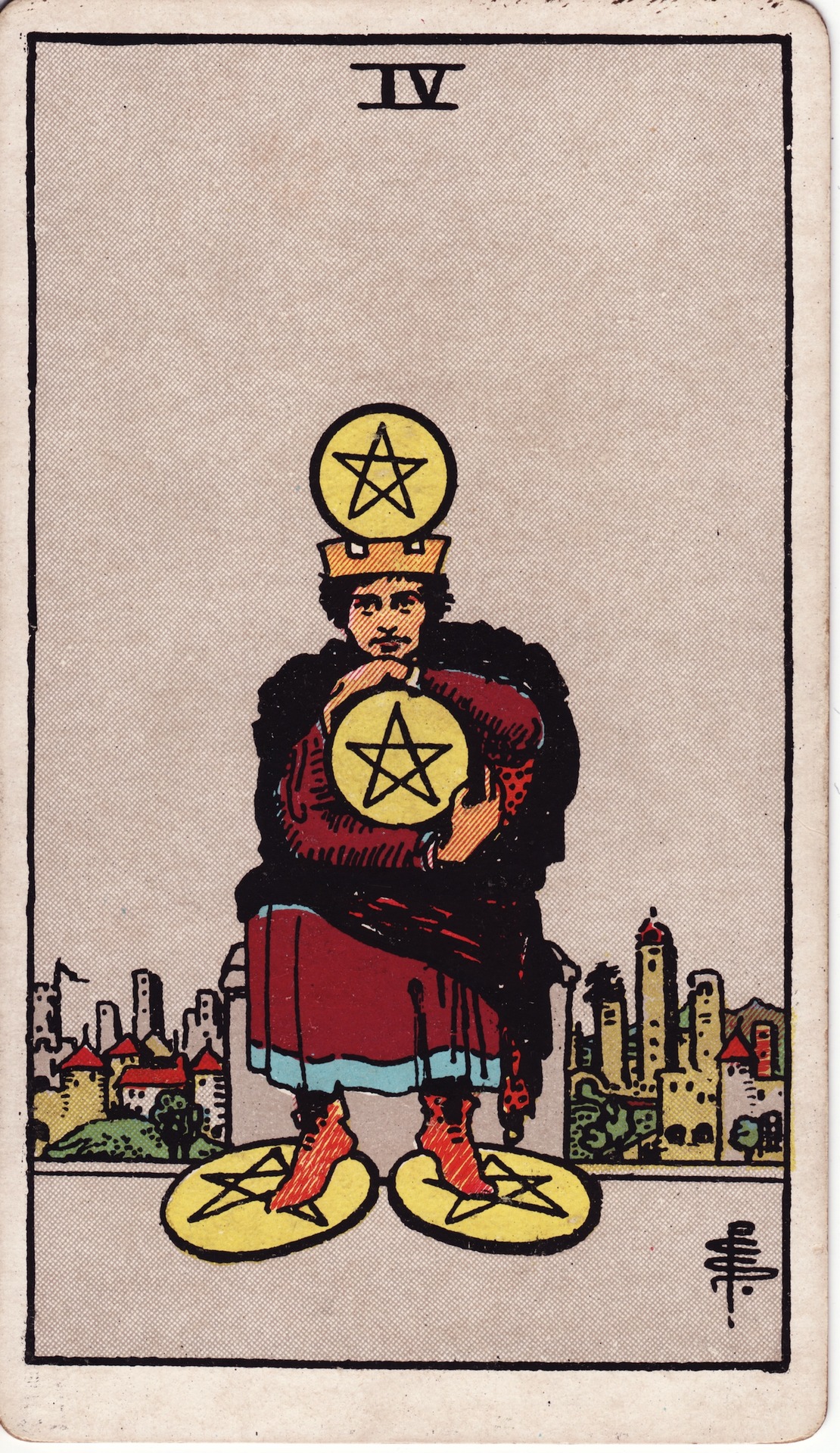
The 4 of Pentacles card is rich with symbolism, primarily depicting a figure, often a king or merchant, holding onto his pentacles tightly. He typically has one pentacle on his head, one clutched to his chest, and one under each foot. This posture immediately conveys a sense of possessiveness, security, and sometimes, isolation. The city visible in the background can represent his material wealth, achievements, and perhaps the societal structures he operates within, but it also suggests he might be detached from the very community that could offer him support or connection. The sturdy, unmoving stance of the figure, often seated on a stone bench or throne, emphasizes a desire for stability and control over his resources. The four pentacles themselves symbolize the culmination of the material world, representing foundations, structure, and earthly achievements. While the number four is inherently stable and grounded, in this context, it often points to a potential imbalance where stability morphs into stagnation or greed. The figure's closed-off body language suggests a fear of loss or a reluctance to share, which can lead to self-imposed isolation. The grey background in some decks further hints at a lack of vibrancy or emotional warmth, overshadowed by an obsessive focus on material possessions. This card speaks to the human tendency to seek security through accumulation, highlighting the fine line between prudent management and hoarding, and the potential spiritual cost of clinging too tightly to the physical realm. It serves as a reminder to evaluate what truly brings security and happiness versus what merely creates an illusion of control.
Explore More Tarot Wisdom
Discover the complete tarot deck and learn about all 78 cards, their meanings, and how they can guide your journey.
try daily readingDetailed Symbolism
The 4 of Pentacles card is rich with symbolism, primarily depicting a figure, often a king or merchant, holding onto his pentacles tightly. He typically has one pentacle on his head, one clutched to his chest, and one under each foot. This posture immediately conveys a sense of possessiveness, security, and sometimes, isolation. The city visible in the background can represent his material wealth, achievements, and perhaps the societal structures he operates within, but it also suggests he might be detached from the very community that could offer him support or connection. The sturdy, unmoving stance of the figure, often seated on a stone bench or throne, emphasizes a desire for stability and control over his resources. The four pentacles themselves symbolize the culmination of the material world, representing foundations, structure, and earthly achievements. While the number four is inherently stable and grounded, in this context, it often points to a potential imbalance where stability morphs into stagnation or greed. The figure's closed-off body language suggests a fear of loss or a reluctance to share, which can lead to self-imposed isolation. The grey background in some decks further hints at a lack of vibrancy or emotional warmth, overshadowed by an obsessive focus on material possessions. This card speaks to the human tendency to seek security through accumulation, highlighting the fine line between prudent management and hoarding, and the potential spiritual cost of clinging too tightly to the physical realm. It serves as a reminder to evaluate what truly brings security and happiness versus what merely creates an illusion of control.
💕 Love & Relationships
In love and relationships, the 4 of Pentacles suggests a need for security and control, which can manifest as possessiveness, jealousy, or a reluctance to open up emotionally. You or your partner might be clinging to old patterns, past hurts, or even financial resources, making it difficult for the relationship to grow. It could indicate someone is unwilling to commit fully or is holding back affection. For singles, it might mean you're guarded, afraid of vulnerability, or prioritizing material security over emotional connection. The card encourages releasing control, sharing more freely, and trusting that vulnerability can lead to deeper intimacy, rather than loss.
💼 Career & Work
Professionally, the 4 of Pentacles points to a strong desire for financial security, stability, and control over one's assets or position. You might be very focused on saving money, protecting your job, or establishing a solid foundation in your career. While this can be beneficial for building wealth and securing your future, it can also lead to rigidity, a reluctance to take risks, or an unwillingness to adapt to new opportunities. It might indicate hoarding resources, knowledge, or power within a team, rather than sharing for collective benefit. The card advises finding a balance between security and openness to growth, and to consider if your cautious approach is hindering innovation or collaboration.
🌿 Health & Wellness
Regarding health, the 4 of Pentacles can indicate a need to hold onto certain routines or beliefs, which might be beneficial for consistency but could also hinder necessary change. It might suggest a reluctance to let go of unhealthy habits or an excessive focus on control over one's body or diet, potentially leading to anxiety or restrictive behaviors. On a physical level, it can sometimes relate to issues of stagnation, such as constipation or circulatory problems. The card encourages examining where you might be clinging too tightly to old patterns and invites you to embrace flexibility and trust in natural healing processes, rather than trying to overly control every aspect of your well-being.
✨ Spiritual Growth
Spiritually, the 4 of Pentacles challenges you to examine your relationship with material possessions and worldly security. Are you allowing your attachment to the physical world to overshadow your spiritual growth? This card suggests that true security and abundance come from within, not from what you accumulate externally. It can signify a spiritual stagnation if you are too focused on protecting what you have, rather than sharing your gifts or embracing the flow of universal energy. The card encourages letting go of fear, cultivating generosity, and understanding that spiritual wealth is found in connection, openness, and trust in the divine flow, rather than in clinging to earthly treasures.
Common Questions
What does the 4 of Pentacles mean in a 'yes' or 'no' reading?
The 4 of Pentacles typically suggests 'no' to questions requiring change, movement, or release. It often means 'yes' to questions about maintaining the status quo, holding onto something, or needing to establish security, but with a strong caution about potential stagnation or possessiveness. It's rarely a straightforward 'yes' for positive new beginnings.
How can I overcome the possessiveness indicated by the 4 of Pentacles?
To overcome possessiveness, cultivate generosity, practice mindfulness to observe your attachments without judgment, and actively work on building trust in yourself and others. Journaling about your fears of loss can also be insightful. Start by sharing small things or letting go of minor controls to build confidence in openness.
Is the 4 of Pentacles always a negative card?
Not inherently. While it often highlights potential downsides of excessive control and attachment, it can also represent financial stability, careful planning, security, and establishing strong foundations. It only becomes 'negative' when these positive traits are taken to an extreme, leading to rigidity, greed, or isolation. It's a reminder to find balance.